
Papua New Guinea to become the next global main source of copper
Papua New Guinea (PNG) holds some of largest undeveloped copper resources in the world. S&P Global projects copper demand will rise 50% by 2040 (to 42 Mt) while supply falls short by 10 Mt.
Copper prices are at record high on tight inventories and disruptions, as top producers Chile and Peru are rocked by strikes and protests.
Why is copper demand rising?
Copper is critical to electrification. No copper, no data centres, no EV charging, no energy transition — and no modern power grid. The problem, as with so many critical minerals, is that demand is accelerating just as supply tightens.
The latest S&P Report finds annual copper demand will jump 28 Mt in 2025 to 42 Mt by 2040, a 50% increase. The study projects a potential 10Mt copper shortfall by 2040 without significant supply expansion.
Demand is being driven by four main factors:
- AI and data centers
- core economic demand, from appliances to construction
- the energy transition
- defense
- (and potentially robots will add a fifth demand driver)
By 2030, data centers alone could rise from today’s 5% to 14% of US electricity demand; electric vehicles (EVs) require x2.9 more copper than a conventional car; the developing world is projected to add as many as two billion new air conditioners by 2040.
In 2023, Papua New Guinea exported US$904million of copper ore, with production to rise by a CAGR of 8% between 2023-2027.
Production currently comes mainly from two (aging) mines, one of which produces copper as by-product of gold: Ok Tedi (Western province, where copper is the primary product) and Kainantu mine (Morobe province, where copper is produced as a by-product of gold).
However, PNG has some of largest undeveloped copper-rich deposits in the world that have never been mined. Wafi-Golpu, Frieda River and Yandera alone host billions of tonnes of ore.
In total, PNG has at least three large copper projects at feasibility stage (plus a controversial seafloor deposit): Wafi-Golpu, Frieda River, and Yandera (plus the older Solwara-1 project).
In feasibility studies: Wafi-Golpu (~161 ktpa Cu plus 266 Koz pa Au), Frieda River (initial plans ~100 ktpa Cu & 160 Koz Au) , Yandera (~3.1 Mt Cu resource), among others.
Wafi-Golpu (Morobe Province): PNG’s crown jewel.
This Newcrest/Harmony Gold project has one of the world’s largest undeveloped copper-gold deposits. The Wafi-Golpu joint venture’s copper Mineral Reserves total 2.3 Mt and total copper reserves with mineral resources (inclusive) at 4.3 Mt.
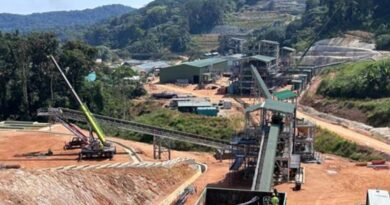
Frieda River (West Sepik), majority-owned by China’s Guangdong Rising, based on the extraction of the Horse-Ivaal-Trukai- Ekwai-Koki (HITEK) porphyry copper-gold deposit contains 12Mt of copper. A feasibility study estimates average annual production of 670,000 tonnes of concentrate containing 175,000t of copper and 230,000 ounces of gold.
Yandera (Madang) is a large porphyry deposit held by Freeport Resources. Yandera’s inferred resource is on the order of 3MT of copper, making it one of PNG’s largest undeveloped copper prospects — Freeport describes Yandera as “one of the largest undeveloped copper deposits in the world.” The Pre-feasibiliity Study estimates the project’s potential annual production of 100,000 tonnes of copper over a 20-year LOM.
In December 2025, PNG granted a suite of environmental permits for Frieda’s mine, power grid, hydro project, road and port. And, in January 2026, Freeport signed with a Papua New Guinea’s state-owned mining investment company, to collaboratively advance the 100%-owned Yandera Copper Project.
There are, of course, enormous challenges for each of these projects. Not only the delays in getting permitting with government and community agreement, but also multi-billion dollar infrastructure costs, from ports to energy projects, for example, Frieda’s model involves a 600 MW dam and 260 km of transmission lines , a colossal engineering challenge in dense jungle. The current price of copper, however, changes the investment-risk dynamic.