China dominates titanium industry from ore mines to alloy production
China controls a vertically integrated titanium empire – from ore mines and TiO₂ pigment plants to sponge and aerospace alloy production – giving it unprecedented influence over global prices and supply, but faces structural constraints that creates opportunities for Western suppliers.
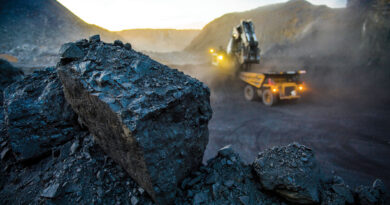
A major US defense prime conducted a recent, rare deep trace of its titanium supply chain, reaching 13 tiers down — it led directly to “Chinese mines, Chinese roads, and Chinese trucks” as confirmed by their supply chain specialists.
The example is indicative of China’s rising global titanium dominance so that, by 2024, China accounted for:
- 34%, the highest global producer, of primary titanium minerals, ilmenite and rutile
- And 67% of global titanium sponge production , with domestic sponge capacity around 320,000 t/year in 2024 and rising in pigment, China’s TiO₂ production capacity reportedly reached 6.05 million tons by the end of 2024, with an additional 1.3 million tons planned for 2025, representing over 55% of global capacity
This scale allows Chinese producers to influence pricing across the entire titanium value chain. It’s a dominance that stems from cost advantages, scale, and integration.
But, a closer examination of China’s production reveals critical constraints across aerospace qualification, feedstock access, and market segmentation. This creates meaningful opportunities for Western and allied producers who are advancing trade defenses and supply chain diversification efforts.
What is titanium and why is it important?
Titanium is a lightweight, high-strength metal prized for its resistance to corrosion and extreme temperatures. It has the highest strength-to-weight ratio of any structural metal, about as strong as steel but 45% lighter.
Titanium’s strength-to-weight ratio makes the metal indispensable across aerospace, defense, medical implants, and advanced manufacturing. Titanium alloys form the backbone of jet engines, airframes, and missile casings; titanium dioxide (TiO₂), its oxidized form, is used in paint pigments, coatings, and solar panels.
The US, EU, and Japan classify titanium as critical because it’s essential for military aircraft, naval vessels, and energy systems. Demand for titanium for aerospace engines alone is expected to grow at 10.5% CAGR over next 5 years, as just one example of its growing importance in parallel to an evolving defense sector. Another example of titanium’s critical role in defense, the US F-22 Raptor contains roughly 39% titanium by weight.
Yet, titanium is concentrated in only a few supply chains.