
Kumba: Waste mining and production in line with expectations
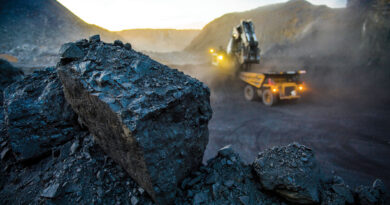
JOHANNESBURG: Kumba Iron Ore Limited has reported its total waste mining increased by 4% to 83.5 Mt (H1 2025: 80.3 Mt). This performance was achieved despite productivity challenges and the impact of above historical average rainfall events, with a recovery plan execution driving a notable 13% uplift in the second quarter performance to 44.3 Mt (Q1 2026: 39.2 Mt).
Total production reached 17.7 Mt compared to (H1 2025: 18.2 Mt) with Kolomela’s lower production partly mitigated by Sishen’s higher production. Production in the second quarter of 8.8 Mt was flat compared to the first quarter (Q1 2026: 8.8 Mt). Waste mining and production remain in line with expectations, with the full-year 2026 guidance at 180 – 195 Mt for waste mining and at 31-33 Mt for production.
Sishen’s waste mining was 64.4 Mt, 5% lower than first half 2025, reflecting a slow start-up of the previously parked up truck fleet, shovel reliability challenges in the first quarter and above historical average rainfall in the second quarter.
Sishen’s production for the first half rose by 3% to 12.7 Mt (H1 2025: 12.4 Mt), underpinned by improved plant stability.
Guidance for 2026 is maintained at 135-145 Mt for waste mining and ~22 Mt for production.
At Kolomela, waste mining ramped up by 55% to 19.1 Mt (H1 2025: 12.3 Mt), in line with the higher strip ratio guided for 2026. In the second quarter, waste mining increased by 24% to10.5 Mt (Q1 2026: 8.5 Mt). However, Kolomela’s first half production decreased by 16% to 4.9 Mt (H1 2025: 5.9 Mt) due to the planned drawdown of high stock levels in the first quarter and plant maintenance in the second quarter, which coincided with the Transnet logistics maintenance shutdown. Kolomela remains on track to achieve the full year guidance of 45-50 Mt for waste mining and ~10 Mt for production.
Unit costs for the year are expected to remain within guidance of R530 – 560/dmt for Sishen and R430 – 460/dmt for Kolomela. Inflationary cost pressure on key mining input items linked to the Middle East conflict, together with sustained rand strength against the US dollar, placed upward pressure on the C1 unit cost in the half year. Subject to these pressures easing, its C1 unit cost outlook is unchanged at ~US$45/wmt.
Year-to-date, Kumba’s Fe content averaged 63.6% (H1 2025: 64.1%) due to variability in ore grade at Kolomela. Both the iron ore content and lump-to-fine ratio at 66:34 (H1 2025: 67:33) remain ahead of its peers in the iron ore market.
This translated to an average realised FOB export price of US$90/wmt (H1 2025: US$91/wmt), an 8% premium benefit relative to the Fastmarkets 62% Fe FOB benchmark export price of US$83/wmt (H1 2025: US$84/wmt).
Steel mill margin pressures continue to drive near-term demand. However, lump and high-grade quality premia were supported by lump stocks falling to a near 12-month low at Chinese ports. Structural decarbonisation trends are steadily reshaping demand toward higher-grade iron ore products that play a critical role in helping steelmakers reduce their carbon footprint. It is increasingly clear that higher carbon emission steel will face growing penalties under the newly implemented Carbon Border Adjustment Mechanism framework in Europe, placing energy efficiency at the centre of long-term iron ore industry competitiveness.
Full year 2026 guidance
Subject to Transnet’s logistics performance, Kumba’s full year 2026 guidance is unchanged. Sishen’s production will be weighted to the first half of 2026, due to the tie-in of the UHDMS project in the second half of 2026. Sales are not expected to be impacted owing to the planned drawdown of finished stock during the tie-in.