
Platinum supply growth is to be limited to recycling in the near-term
The Iran war has dominated the global landscape since the US and Israel launched their first strikes on 28 February 2026. Although the direct conflict has eased somewhat, the Strait of Hormuz, and more specifically transiting the Strait, has been drawn into a wider dispute leading to a global energy crisis as oil and gas is trapped in the Persian Gulf.
Brent crude oil prices have increased by 55% since 28 February while, platinum and gold prices are 16% and 13% lower respectively. At the outset of the conflict, precious metals sold off as investors sought liquidity with the US dollar regaining some of the ground it had lost over 2025.
However, a larger headwind to precious metals has been the reduction in investor holdings as a drawn-out conflict is creating upside risks to inflation from higher energy prices, which in turn raises interest rate expectations and weakens the attractiveness of non-yielding precious metals.
These factors have underpinned some platinum ETF disposals, which together with some exchange stock outflows have resulted in a Q1 2026 platinum market surplus of 268 koz. Note that, with the inflation risks being exogenous and not growth driven, it is possible that we see the Iran/rates linked dollar/precious metals rotation reverse as the year unfolds, as a higher rate environment puts more pressure on the US balance sheet, which must contend with the weight of ever-growing debt.
Beyond investment demand, the Iran war has led to some minor platinum demand revisions within the petroleum and chemicals segments given some previously expected maintenance has been deferred.
The uncertainty surrounding the Iran war is underpinning heightened forecast risks and should the Strait remain restricted, platinum demand may face further downward revisions. While the Middle East is not a large direct platinum market, platinum demand is more likely to be impacted by the effects of weaker economic growth or indirect factors such as semiconductor production which is reliant on Middle Eastern helium exports.
Importantly, amidst the uncertainty, platinum prices have largely found support at around US$2,000/oz. While prices have retraced from their all-time highs in January 2026, they are flat year-to-date and roughly double the price during the first quarter of 2025.
Through the context of a doubling in prices over the past year, the broad narrative is that supply is struggling to respond meaningfully to higher prices and that the key demand thematics remain well entrenched.
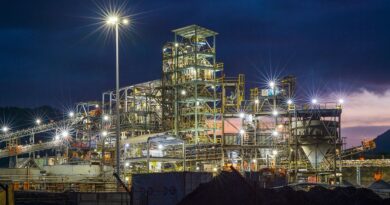
Touching on supply, in 2026 mine supply is expected to be stable compared to 2025. In South Africa, Ivanhoe’s Platreef mine represents the first greenfield project to be commissioned since Styldrift in 2019, highlighting the challenges miners face in quickly responding to prices.
Therefore, supply growth is expected to be limited to recycling in the near-term. While recycling supply did increase by 9% year-on-year in Q1 2026, the rate of growth arguably remains benign in the context of price movements. During the quarter, recyclers cited an increase in receipt of lower grade spent autocatalysts as constraining output.
Declining grades would suggest that scrapyards are processing previously hoarded catalysts that were uneconomical to recycle during 2023 and 2024. If true, and the recycling supply chain is drawing on inventory and still failing to meet recycling supply expectations, it raises questions about whether the robust three to five-year outlook for recycling supply growth may in fact not quite live up to expectations.
Looking at demand, platinum continues to play a critical role in decarbonisation and emerging technologies. Whilst the electrification of the drivetrain is an ongoing trend, automotive PGM demand is proving resilient and should find further support as Euro 7, US Tier 4 and China 7 emission legislation each require more PGMs.
Notably, China’s 15th five-year plan out to 2030 has doubled the fuel cell electric vehicle target to 100k units, which may add much needed impetus to the roll-out of the hydrogen economy.
A longer-term potential demand accelerant could come on the back of regional efforts to improve energy security through increased renewables and hydrogen generation, albeit the impact will most likely fall beyond 2026.
In terms of emerging technologies, platinum has use in several aspects of the increasingly large-scale roll out of AI infrastructure including, crystal crucibles, silicone, fibre optics and data storage.
Taken in aggregate, platinum’s market fundamentals support its compelling investment case. Despite the uncertain external environment, platinum has found price support at US$2,000/oz highlighting that despite a narrower projected platinum market deficit of 297 koz in 2026 versus a record 1.2 moz deficit in 2025, the cumulative impact of four consecutive annual shortfalls has left the physical platinum market tight. Indeed, a series of material market surpluses would be needed to rebuild above ground stocks to sustainable levels.