Green steelmaking: Industrial Realities and Global Mega-Projects
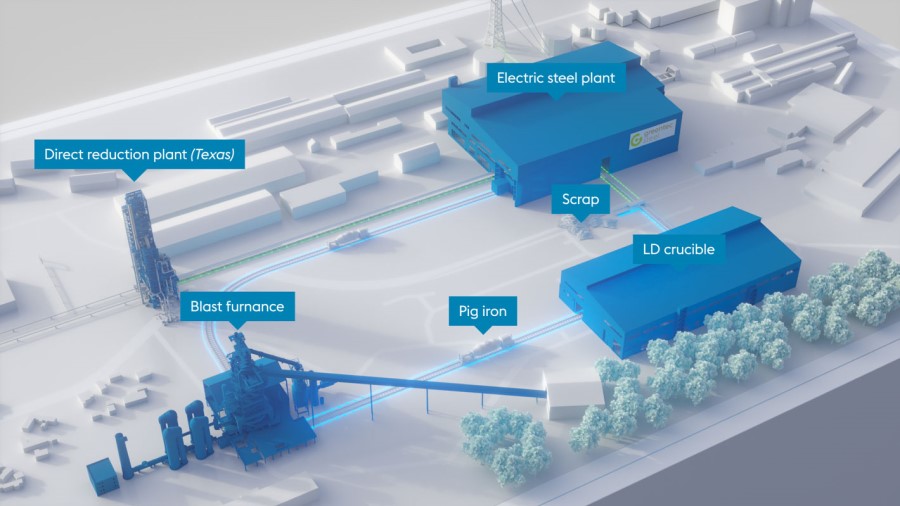
The transition to green steelmaking is moving rapidly from pilot plants to commercial operations, though the geographical rollouts vary significantly based on regional energy access and policy support.
| Region / Company | Strategic Technological Shifts |
| Europe (The Decarbonization Vanguard) | Driven by high carbon taxes, European steelmakers are moving away from traditional blast furnaces. SSAB’s HYBRIT project in Sweden is delivering commercial quantities of fossil-free steel to automotive clients, while H2 Green Steel is constructing a flagship 2.5-million-tonne greenfield hydrogen-to-steel facility in Boden. |
| North America | The US industry has evolved primarily into an EAF-centric market. Operators like Nucor and Steel Dynamics are building advanced EAF mills to target the high-end automotive sector, using natural-gas-based DRI to dilute scrap impurities. |
| Asia (The Scale Challenge) | Producers in China and India face the steepest challenge due to their massive fleets of relatively young blast furnaces. While companies like Baowu Steel Group are investing heavily in microwave-assisted coke reduction and carbon capture technologies, fully transitioning their massive production bases away from coal is expected to take decades. |
The Energy Challenge of Tomorrow
While hydrogen metallurgy offers a proven technical solution to steel’s carbon problem, scaling it up requires an unprecedented volume of energy. Producing one tonne of steel via H2-DRI requires roughly 3.3 megawatt-hours of electricity, meaning a single medium-sized steel mill would consume more green energy than a small European nation.
The future leaders of the global steel market will no longer be determined purely by who has access to the highest-grade iron ore, but by who can secure the cheapest, most reliable access to clean, high-voltage electricity and green hydrogen infrastructure.