Latest developments in space mining
The new space-mining race is led by a small group of pure plays such as AstroForge, Interlune, TransAstra and OffWorld, but the larger capital flow is also flowing into the “picks and shovels” logistics infrastructure, such as launch, lunar transport and delivery, as well as surface mobility and rovers.
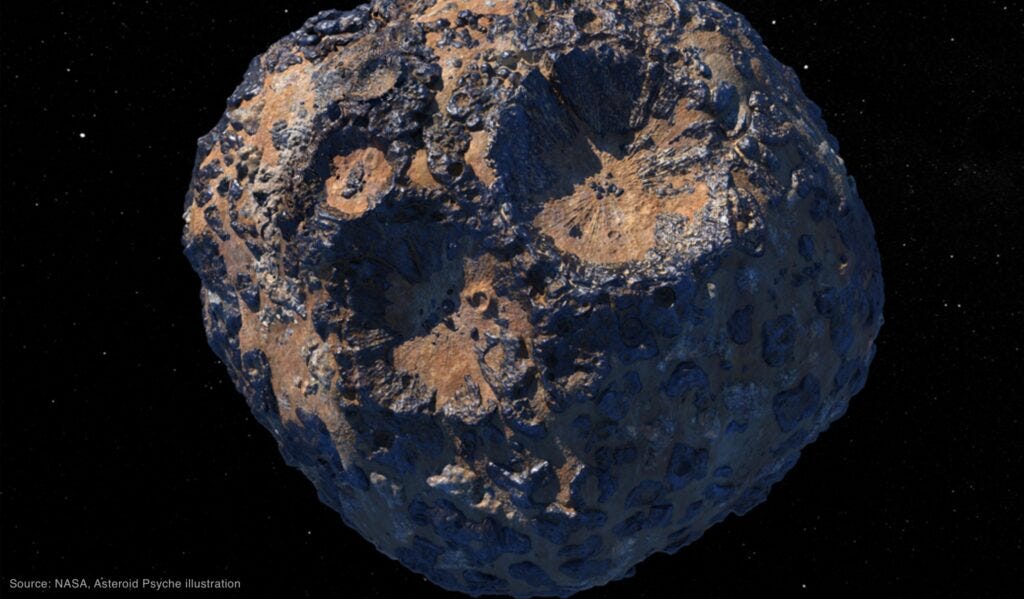
AstroForge, one of the leading companies, claims its DeepSpace-2 spacecraft, planned for launch in the Q4 2026, will be “the first commercial spacecraft to rendezvous with an asteroid” — with a roughly 200 kg spacecraft platform that could eventually support payloads up to 50 kg.
AstroForge’s Odin mission launched successfully in February 2025, contacted Earth multiple times, but then struggled with communication and ground-station issues during its deep-space journey, after assigning the mission only a 30% chance of success. That is not necessarily failure, but the cost of learning — however, it shows how far the sector is from routine mining.
And we’ve already seen companies, such as Planetary Resources and Deep Space Industries, claim mining asteroids will be possible by 2025. Both have since ceased operations.
The regulatory picture is another watch point. The Outer Space Treaty bars national appropriation of celestial bodies, while countries including the US have created domestic frameworks for commercial space resources. That leaves room for business, but not yet the legal certainty of mature mining codes.
The investment case makes sense only if reusable launch cuts the cost of mass to orbit from thousands of dollars per kilogram toward the low hundreds.
Logistics capacity and current costs are, obviously, still too high for space mining to be considered a serious option at scale. Huge challenges space mining also has to solve deep-space transport, autonomous extraction, processing, storage and the question of whether the product is sold in orbit or returned to Earth.
But SpaceX has sent up a green flare — that both the investment case and reusable launch cost are no longer blowing up on the launch pad. It may take decades, but the reaching for the stars no longer seems so far away.