Canada’s transition from a reliable copper producer to a strategic supplier
Canada’s role in global copper supply is evolving as security considerations become more influential in investment decisions. Canada is moving from being a strong to a strategic supply-chain jurisdiction. The world does not just need more copper, it needs copper from places with rule of law, established infrastructure, reliable power, permitting certainty and direct access to allied markets. This is especially so as the United States looks to reduce exposure to fragile supply chains and geopolitical choke points.
Generation Mining is positioned directly in that shift. Our Marathon Copper-Palladium Project in Northwestern Ontario is a fully permitted Canadian critical minerals project located in a tier-one jurisdiction, with access to existing infrastructure and proximity to North American end markets.
With approximately CAD$969 million of project financing now committed, Marathon is advancing at a moment when security of supply is becoming as important as grade. Marathon gives Generation Mining exposure to that location premium: a large critical minerals project in Canada, aligned with North American supply-chain security.
The company’s Marathon project illustrates how Canadian mining developments may benefit from the growing emphasis on domestic critical minerals production. Located in northwestern Ontario, the proposed copper-palladium operation is positioned to supply metals required by a range of industrial and technology applications while contributing to North American efforts to diversify critical mineral supply.
Canada’s approach to critical minerals is increasingly focused on developing complete supply chains rather than simply encouraging exploration and mine development. Transport infrastructure, electricity transmission, mineral processing and access to project financing are becoming central components of the country’s strategy.
In March 2026, the federal government announced more than US$2.5 billion in new critical minerals programmes and investments. The measures brought together infrastructure funding, project financing and permitting support under a broader effort to connect mineral resources with processing facilities and end markets.
The following month, Canada introduced the Canada Strong Fund, a proposed US$17.6 billion sovereign wealth fund intended to invest alongside private-sector capital in strategically important domestic projects. Its areas of focus include infrastructure, energy, advanced manufacturing and mining.
These initiatives build on existing measures designed to stimulate investment in mineral exploration and strengthen cooperation with the United States. The 30% Critical Mineral Exploration Tax Credit is intended to encourage exploration funding, while formal bilateral collaboration on critical minerals aims to secure supplies needed for strategic manufacturing, defence and clean-energy technologies.
The practical effects of this policy direction are beginning to emerge. Conditional approval has been granted for up to US$31.2 million in BC Hydro transmission upgrades to support major mine developments in northwestern British Columbia, including Newmont’s Red Chris copper expansion. Improving electricity infrastructure can help remove a significant constraint on large-scale mining projects, particularly those requiring substantial power for underground operations and ore processing.
However, the most consequential development may ultimately involve copper processing rather than mine production alone.
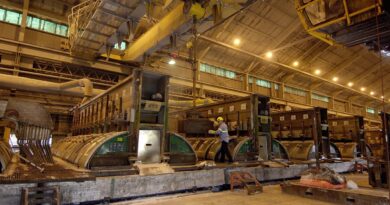
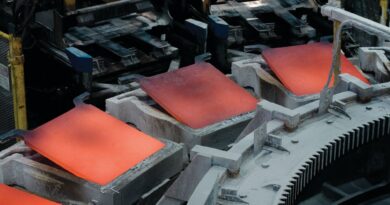
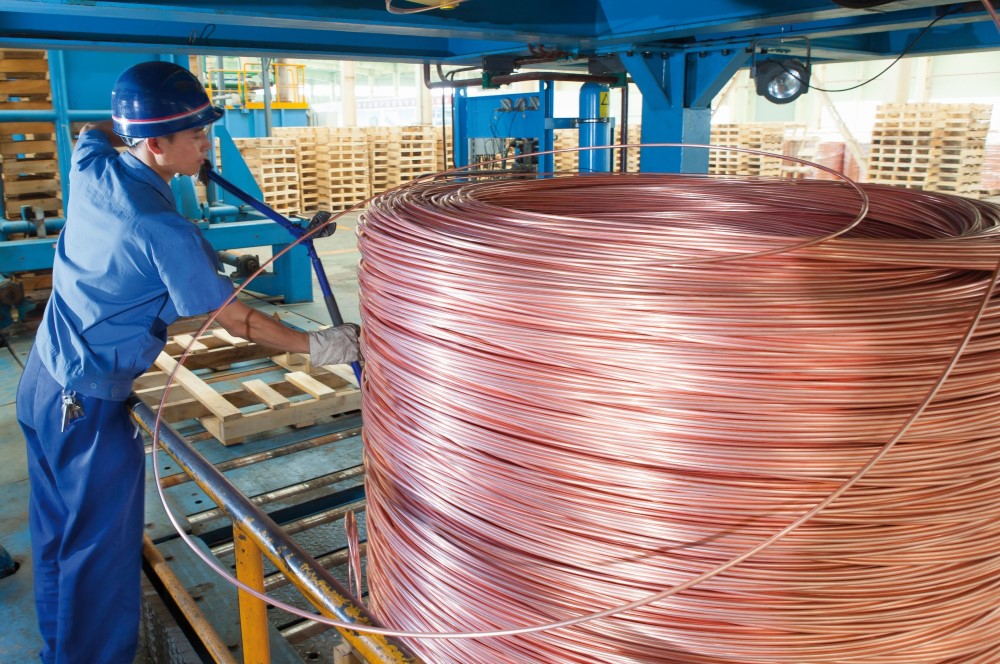
Natural Resources Canada has asked industry participants to assess the commercial viability and potential location of a new copper smelter and refinery in Western Canada. At present, nearly all copper concentrate produced in the western part of the country is exported for processing overseas. A new facility would create the possibility of retaining more of that activity domestically and strengthening the connection between Canadian mines and North American industrial consumers.
If developed, the proposed facility would establish a second domestic copper smelting and refining system alongside the existing complex in Quebec. Such a development could reduce dependence on overseas processing capacity, shorten parts of the supply chain and improve Canada’s ability to capture additional value from its mineral resources.
The strategic implications are substantial. Mining more copper does not necessarily guarantee greater supply security if the material must still travel long distances to reach processing facilities. By expanding domestic refining capacity, Canada could address a different but equally important vulnerability in the global copper market.
Canada’s investment proposition does not depend on surpassing the world’s largest copper producers in terms of output. Rather, it rests on a combination of political stability, access to allied markets, established infrastructure, comparatively secure logistics and renewable-heavy electricity generation in key provinces.
These advantages are becoming more valuable as mining companies confront a world in which supply-chain resilience can be just as important as production costs and ore quality. Disruptions to shipping routes, volatile energy prices and geopolitical tensions have demonstrated that the location of a mine can influence the reliability and economics of the copper it produces.
For North American manufacturers, access to copper from a stable neighbouring country can reduce exposure to vulnerable transport corridors and politically uncertain suppliers. For mining investors, meanwhile, projects with strong infrastructure, reliable power and supportive financing arrangements may offer a more attractive risk-adjusted proposition than assets that depend on complex logistics or uncertain operating conditions.
Canada still faces challenges, including rising development costs, infrastructure requirements and the time needed to bring major projects into production. Government support alone cannot eliminate these obstacles, and proposed investments must ultimately demonstrate commercial viability.
Nevertheless, the country’s growing emphasis on roads, transmission networks, project finance and domestic processing is reinforcing its position within the emerging critical minerals landscape.
Copper investment is no longer determined solely by deposit size, ore grade or anticipated production volumes. As geopolitical risk increasingly shapes commodity markets, secure access to infrastructure, processing capacity and end markets is becoming a more important part of an asset’s overall value. Canada is positioning itself to capitalise on this shift, turning its geographic and institutional advantages into a strategic role in the future of North American copper supply.